
Conocenos
Datos que hablan, innovación que inspira
estrategias que ganan !
Somos una empresa especializada en comunicación, marketing e investigación, dedicada a brindar soluciones estratégicas para el desarrollo de proyectos exitosos. Integramos tecnología avanzada, análisis riguroso de datos y creatividad para fortalecer a líderes y organizaciones.




MiPymes
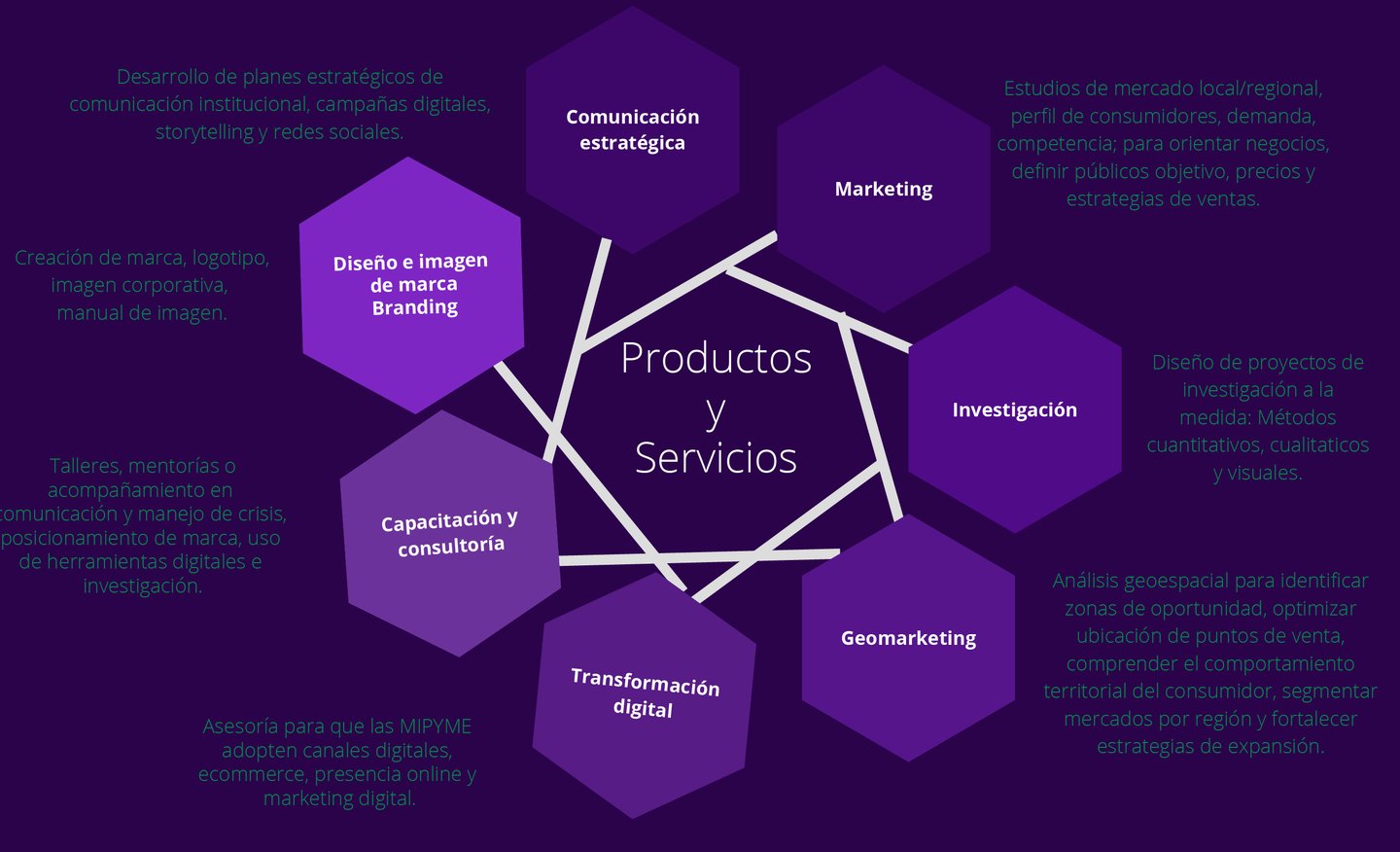
Ayudamos a fortalecer áreas críticas para el desarrollo de las micro, pequeñas y medianas empresas: imagen, comunicación, marketing, geomarketing e investigación aplicada.
A través de diagnóstico, profesionalización y estrategias de posicionamiento, ayudamos a que las empresas mejoren su competitividad, se modernicen y se integren con éxito a mercados cada vez más exigentes.
Además, nuestro enfoque combina herramientas cuantitativas, cualitativas, visuales y de análisis geoespacial que permiten tomar decisiones basadas en evidencia, identificar oportunidades por territorio, optimizar puntos de venta y fortalecer la presencia regional de las empresas. Con ello mejoramos la identidad de marca, impulsamos la digitalización y generamos resultados medibles.


SDES
Somos tus aliados estratégicos para la innovación, análisis y comunicación efectiva. A través de metodologías integrales -visuales, cuantitativas, cualitativas y geoespaciales— contribuimos a mejorar la toma de decisiones, fortalecer la difusión de programas, profesionalizar a las empresas participantes y generar resultados medibles. Esto incrmenta el impacto de la labor de las instituciones y les permite optimizar recursos y avanzar hacia sus objetivos de desarrollo económico con mayor precisión, claridad y alcance.
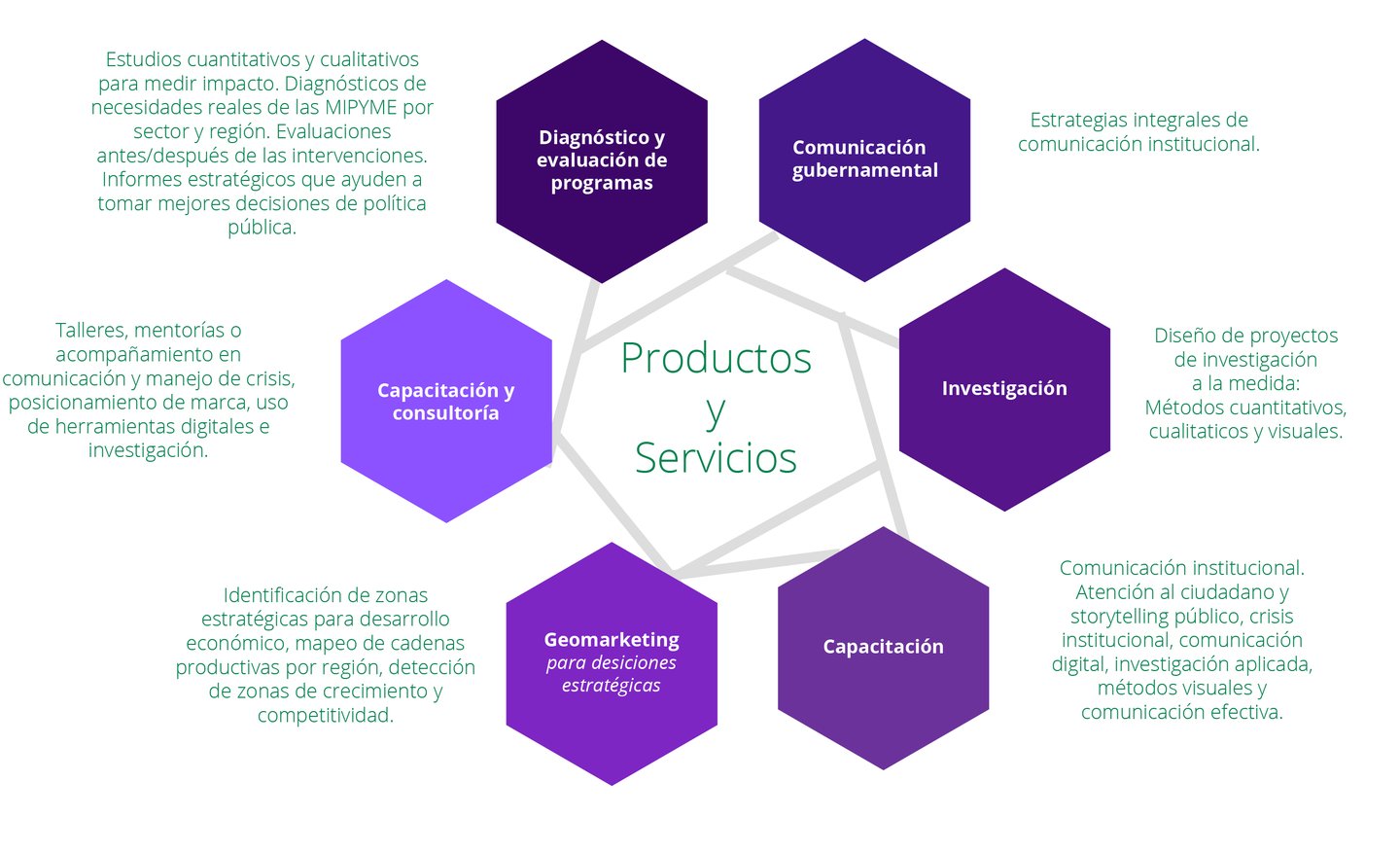


Capacitación
Gestión de crisis corporativa.
Creación de Marca.
Comunicación institucional.
Storytelling corporativo y comunicación persuasiva Liderazgo comunicativo y relación con públicos internos/externos.
Taller para mejorar atención al ciudadano y la comunicación pública.
Taller de imagen física.
Uso de métodos visuales para la investigación.
Charlas
Participación política de las juventudes y los impactos de las redes sociodigitales.
Emoción y acción en politica.
Contactanos